YOUR BROWSER IS OUT-OF-DATE.
We have detected that you are using an outdated browser. Our service may not work properly for you. We recommend upgrading or switching to another browser.
Date: 21.10.2025
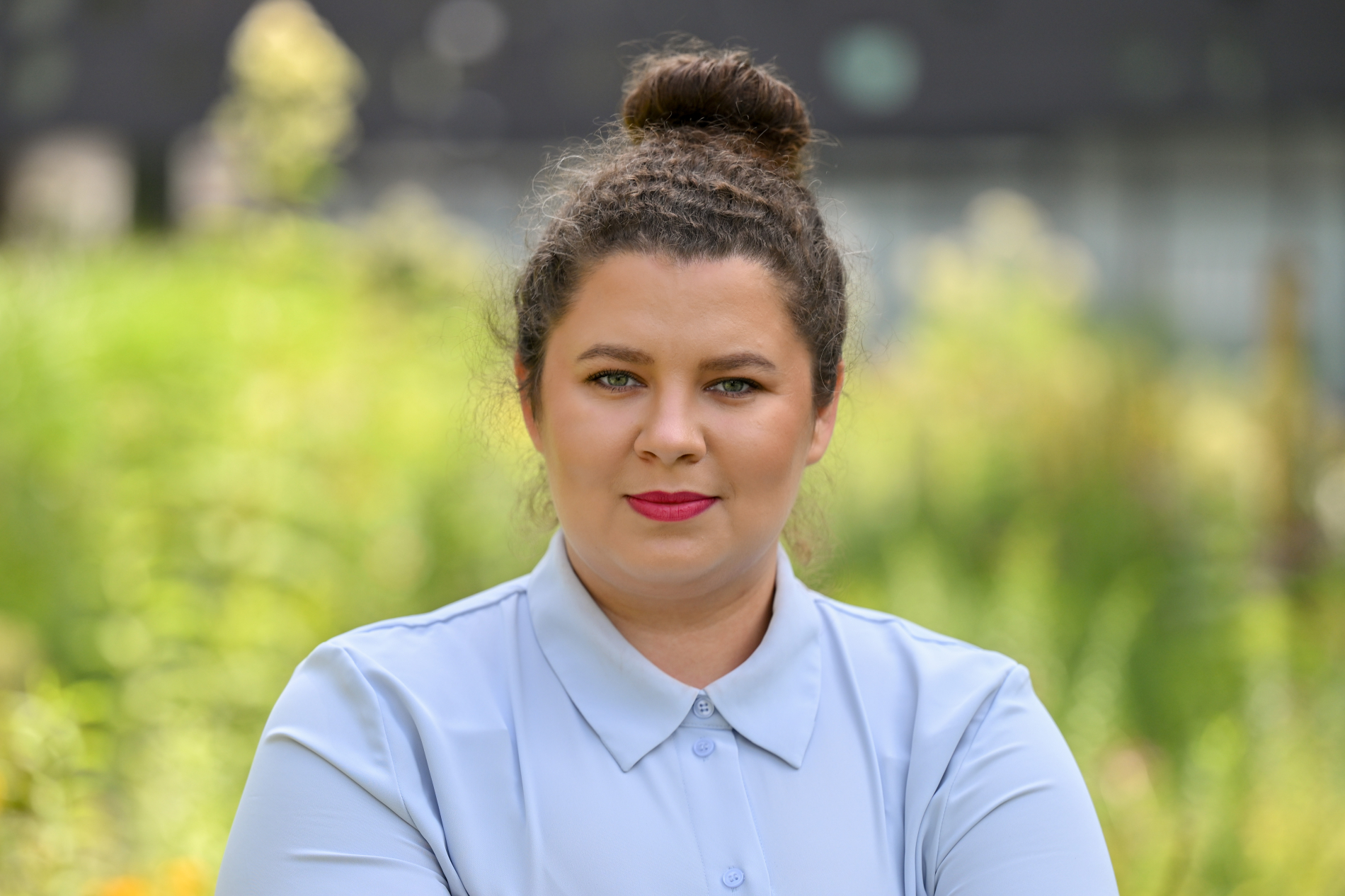
Dr. habil. Eng. Anna Siekierka, Associate Professor at the Department of Process Engineering and Technology of Polymer and Carbon Materials, has become a laureate of the prestigious ERC Starting Grant, awarded by the European Research Council (ERC). Her proposal was selected from over 4,000 applications submitted by scientists across Europe. This is only the second ERC Starting Grant in the history of our university.
Battery Recycling and Energy Recovery
Professor Siekierka’s project, titled
“Reverse salinity energy harvesting-assisted electromembrane system for metal ion fractionation and hydrogen production from battery waste” (ReHeal4waste),
received funding of €1.5 million.
The project aims to develop an innovative technology that enables the recovery of valuable raw materials from solutions derived from spent batteries, while simultaneously allowing energy recovery and hydrogen production.
“We need to treat used batteries not as waste, but as a source of valuable raw materials,” emphasizes Prof. Siekierka. “Existing methods for metal separation already exist, but we are still searching for solutions that are more environmentally friendly and economically viable.”
A Resource, Not Waste
Solutions produced during the processing of used batteries contain lithium, cobalt, nickel, manganese, copper, and iron - metals classified as strategic critical raw materials. Their recovery is becoming increasingly important as global demand grows and natural resources diminish.
According to estimates by Transport & Environment, recycling used batteries could, by 2030, meet up to 25% of Europe’s cobalt demand, and between 14–17% of the demand for lithium, nickel, and manganese.
Small Membranes with Big Potential
At the heart of the project are ion-exchange membranes - thin polymer structures about the thickness of a sheet of paper. Prof. Siekierka’s team will develop membranes capable of selectively transporting specific metal ions, allowing their efficient separation.
The researchers will also design a membrane stack, where the process will be powered by energy generated through the mixing of two solutions with different salinity levels (a process known as reverse electrodialysis - RED).
An additional outcome of this process will be the production of hydrogen and oxygen.
Five Years of Research and a New Scientific Team
The project will span five years and will include the design and synthesis of membranes, testing their durability and performance, and modeling ion transport phenomena. The research team will bring together experts in chemistry, physics, and process engineering.
The expected outcomes include a procedure for metal cation separation, a database on membrane properties, and flow models for the membrane stack - resources that may serve as a foundation for future commercial applications of the developed technology.